
Last updated November 15, 2026
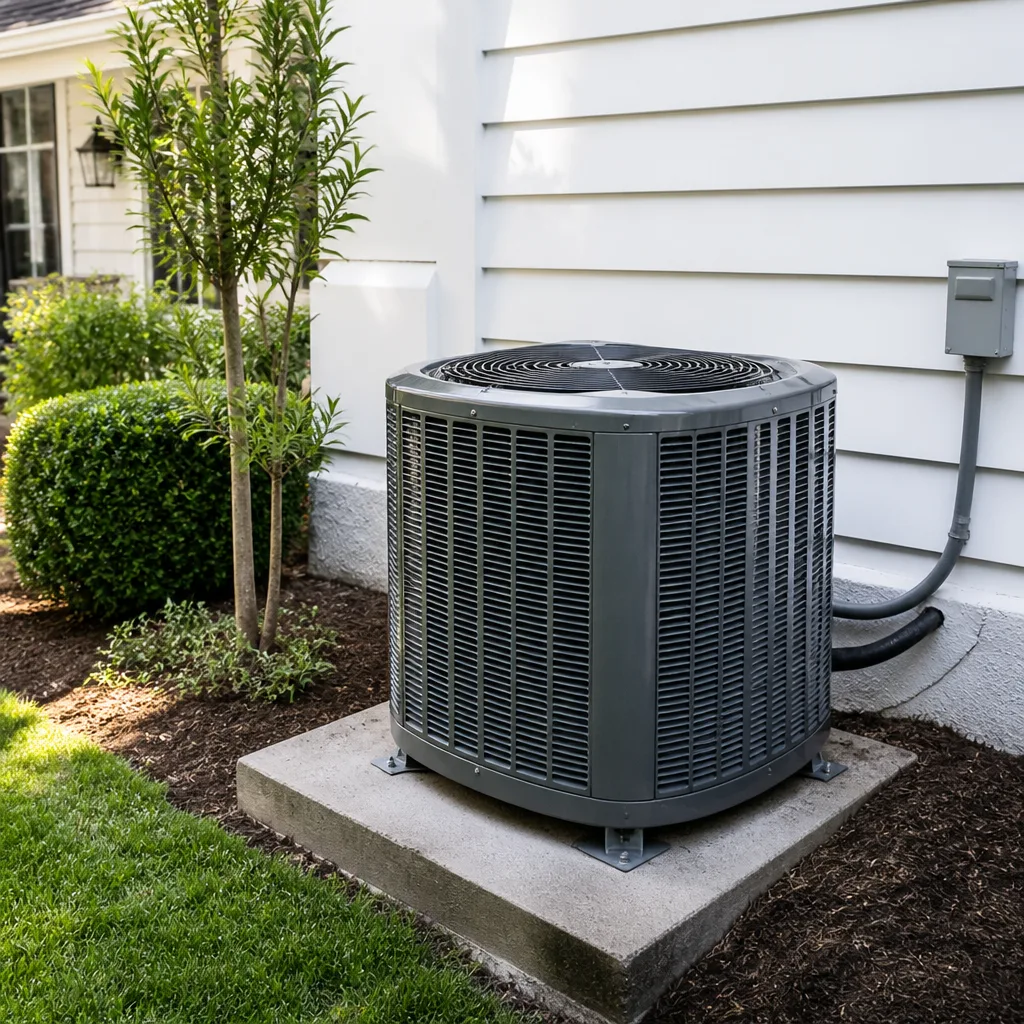 AC repair
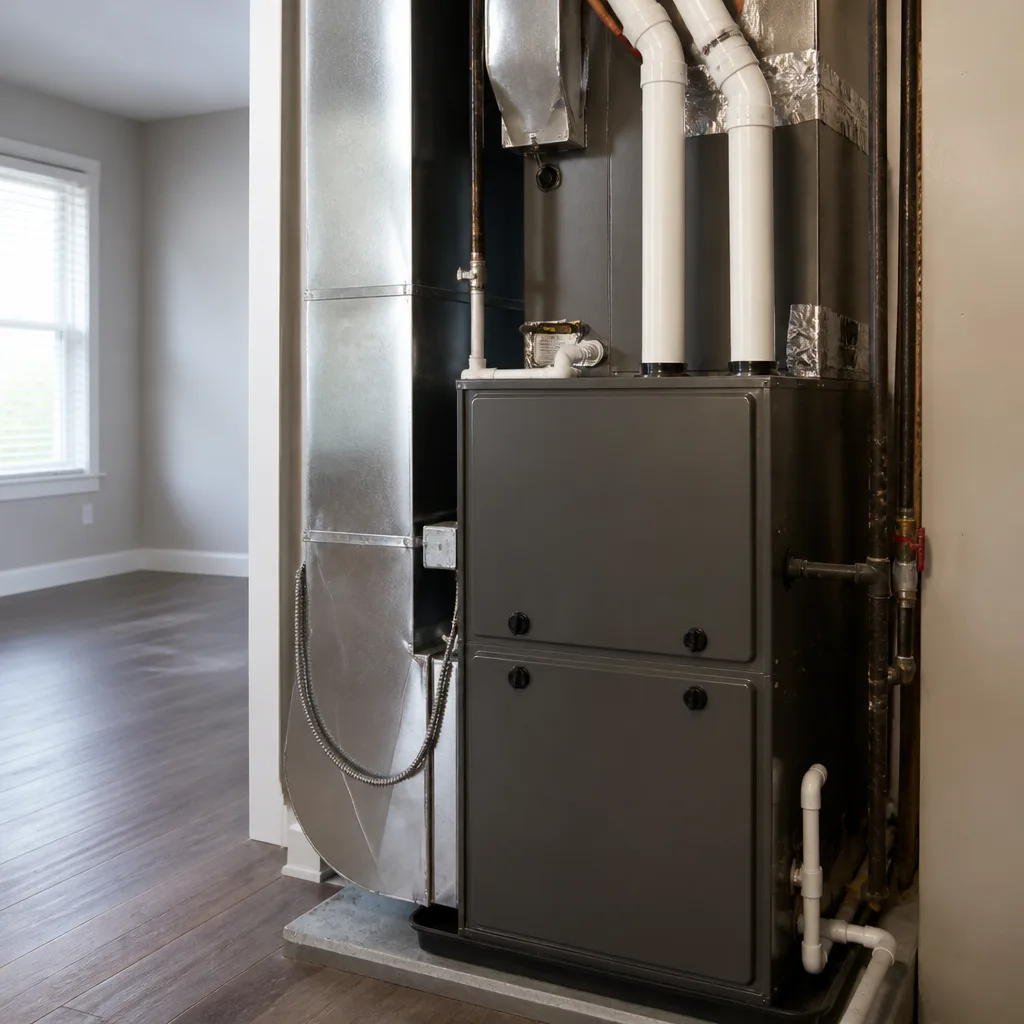 Furnace & heating
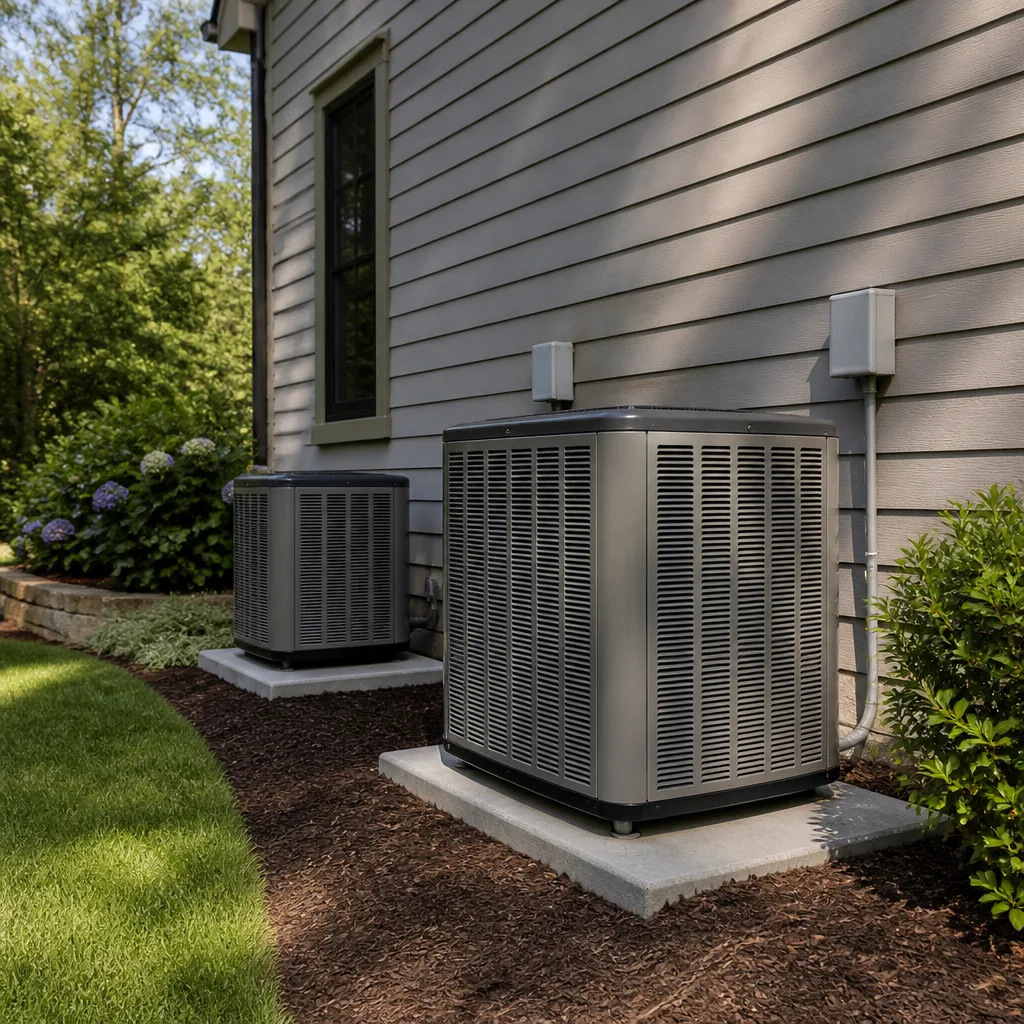 Heat pumps
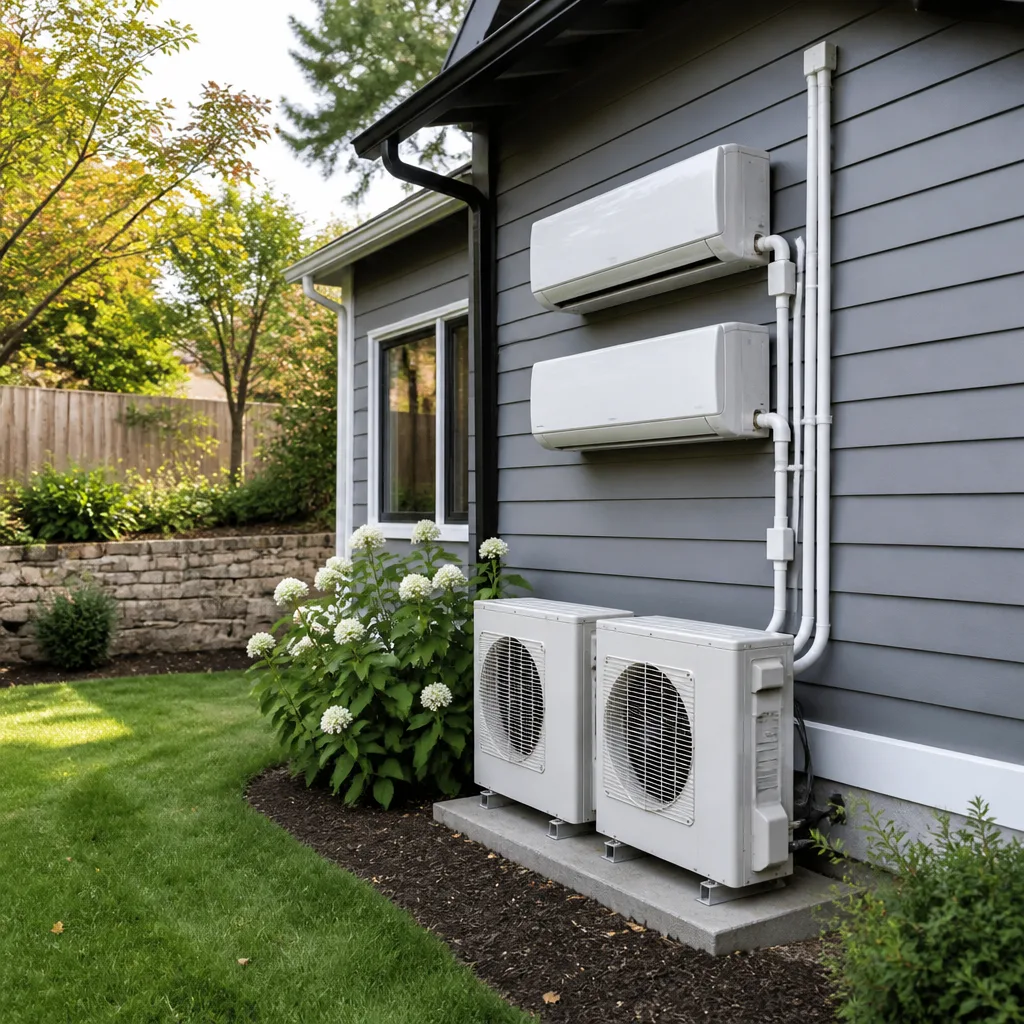 Ductless mini splits
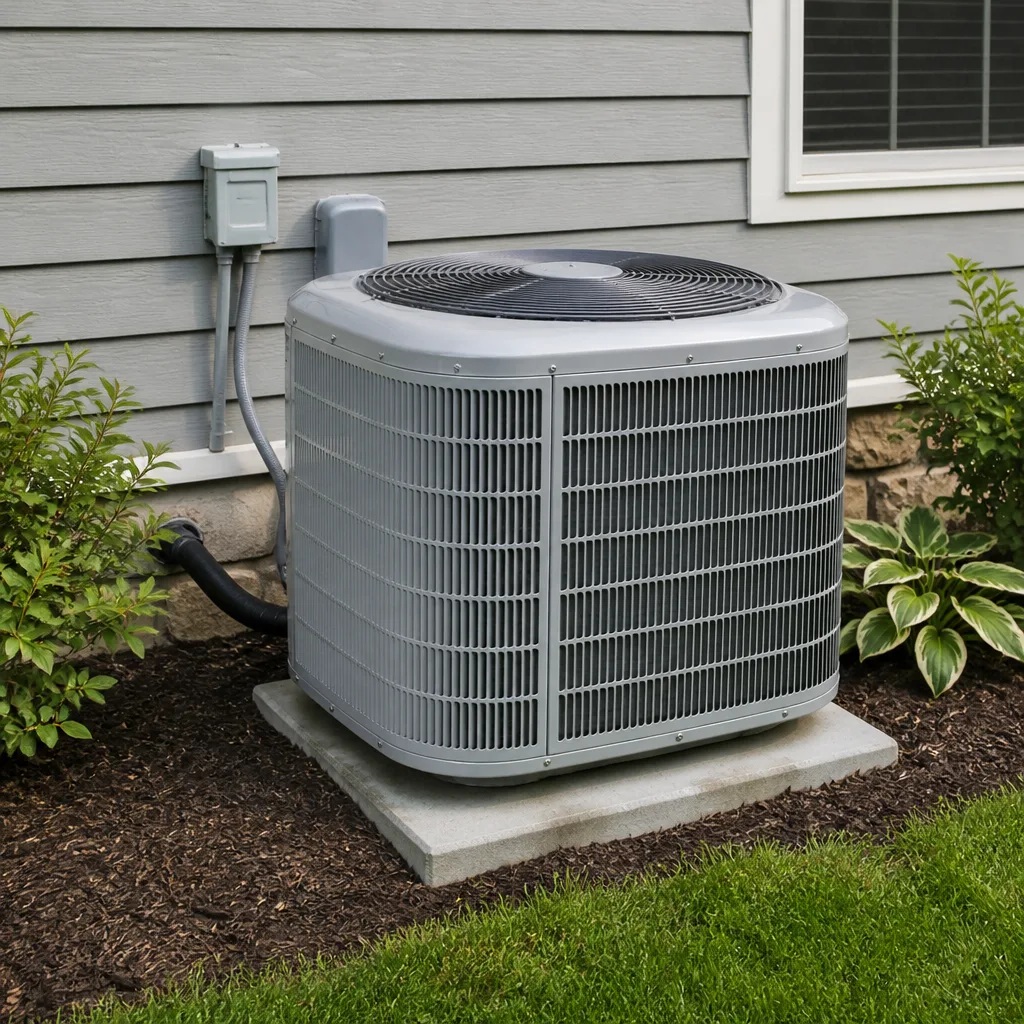 Carrier
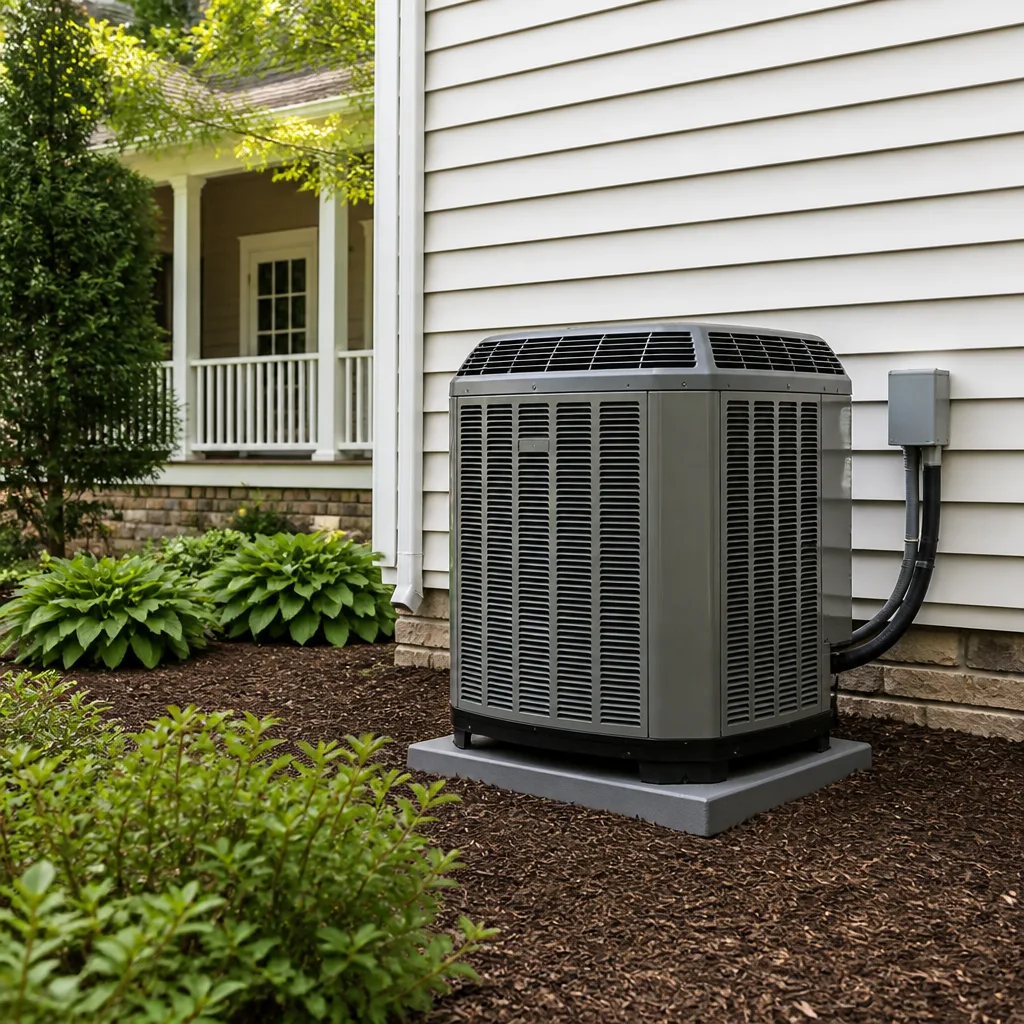 Trane
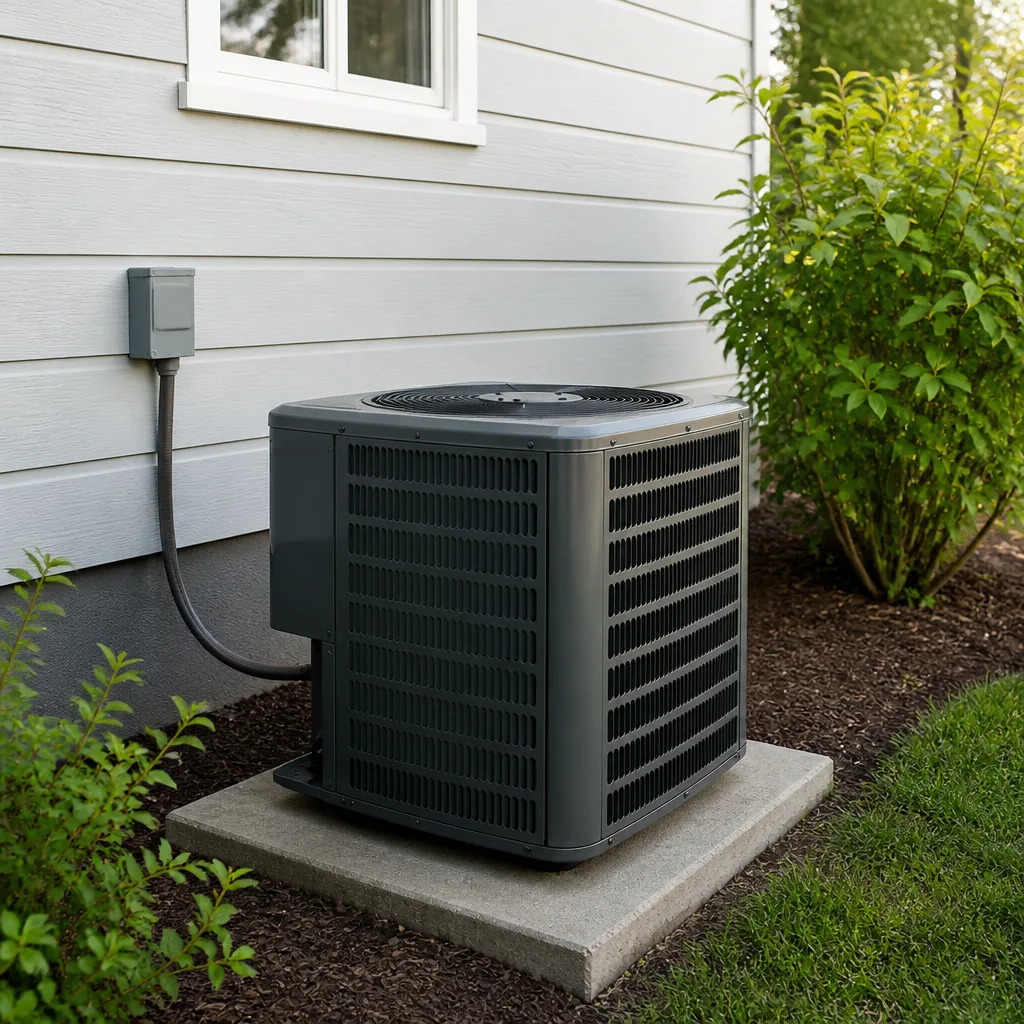 Goodman
Seasonal tune-up and full diagnostic on your Carrier, Trane, or Goodman system - readings shown to you before any repair is proposed
Diagnosis first, numbers second - you approve the repair price before a single part goes in.
Get your free estimateHVAC Emergency Preparedness Guide for Brandon Homes
Most Brandon homeowners treat HVAC emergencies as a repair problem. Something breaks, you call someone, they fix it. But in a place that sits in both a hurricane impact zone and a heat mortality risk area, the real problem isn’t the broken part. It’s the four days your system stays down while the heat index climbs past 105°F and you’re deciding what to do with a parent who takes medications that affect body temperature. The repair is the easy part. The plan is what protects your household. This guide walks through what to do with your system before a named storm, how to inspect it after power comes back, how to triage a failure so you know whether you’re looking at a four-hour fix or a multi-day wait, and how Brandon families with elderly or medically vulnerable members should structure a heat contingency plan that works.
Quick Answer
HVAC emergency preparedness in Brandon means three things: shutting your system down correctly before a storm makes landfall, inspecting it carefully before you restart it after an outage, and having a written cooling contingency plan for household members who are medically vulnerable to heat. Most post-storm AC failures we diagnose are avoidable electrical or water intrusion issues that a five-minute pre-restart inspection would have caught. The rest are the reason a plan matters more than a repair phone number.
Styles & brands we work with
- AC repair
- Furnace & heating
- Heat pumps
- Ductless mini splits
- Carrier
- Trane
- Goodman
Table of Contents
- Pre-Storm Protocol: What to Do With Your HVAC Before a Named Storm
- Post-Storm Inspection: Before You Restart Your System
- Heat Emergency Protocol for Brandon Households With Vulnerable Members
- How to Triage an AC Failure After a Storm
- Whole-Home Generator vs. Portable Unit vs. Mini-Split Backup
- Building Your HVAC Storm Kit for Brandon
- Pre-Season Maintenance That Prevents Most Emergencies
- Common Mistakes to Avoid
- When to Call a Professional
- Frequently Asked Questions
Pre-Storm Protocol: What to Do With Your HVAC Before a Named Storm
The last few hours before a named storm makes landfall are the wrong time to be wondering what to do with your air conditioner. The right protocol is short and you can run through it in under ten minutes.
Start with a system shutdown. Turn your thermostat to the off position rather than just cranking it to a high temperature. Off means the compressor and air handler stop drawing power and the system won’t try to cycle while utility power is unstable. If you have a disconnect switch at the outdoor condenser, pull it. This is the single most protective step you can take for a compressor that’s about to experience a grid event.
Protect the outdoor unit itself. Strapping the condenser down is a builder and code matter, not something you improvise with rope and a stake. What you can do is clear the immediate area of anything that could become a projectile: loose patio furniture, potted plants, a grill, anything light enough to slide into the coil or the fan grille. A condenser that takes an impact doesn’t fail gracefully. It stops, and after the storm you’re looking at a repair that competes with every other storm-damaged house in Brandon for the same technician’s time.
Consider surge protection for the whole system. A surge protector on the condenser circuit and the air handler is a small job that most homeowners postpone until after a loss. If you don’t have one, at minimum unplug ancillary equipment and understand that when the grid comes back, the restoration itself is often the surge event, not the outage.
One more step that people skip: photograph your system. Take pictures of the outdoor unit, the indoor air handler, the electrical disconnect, and the serial plate. If you need to file an insurance claim after the storm, those pictures save you days of argument. And write down your regular HVAC company’s number somewhere other than your phone.
Post-Storm Inspection: Before You Restart Your System
This is where most avoidable failures happen. The storm passes, the power comes back, and the first thing everyone does is flip the thermostat down to 68°F and wait. If the system has water in it or a compromised electrical connection, that’s the moment it fails or worse.
Work through this checklist before you turn anything back on:
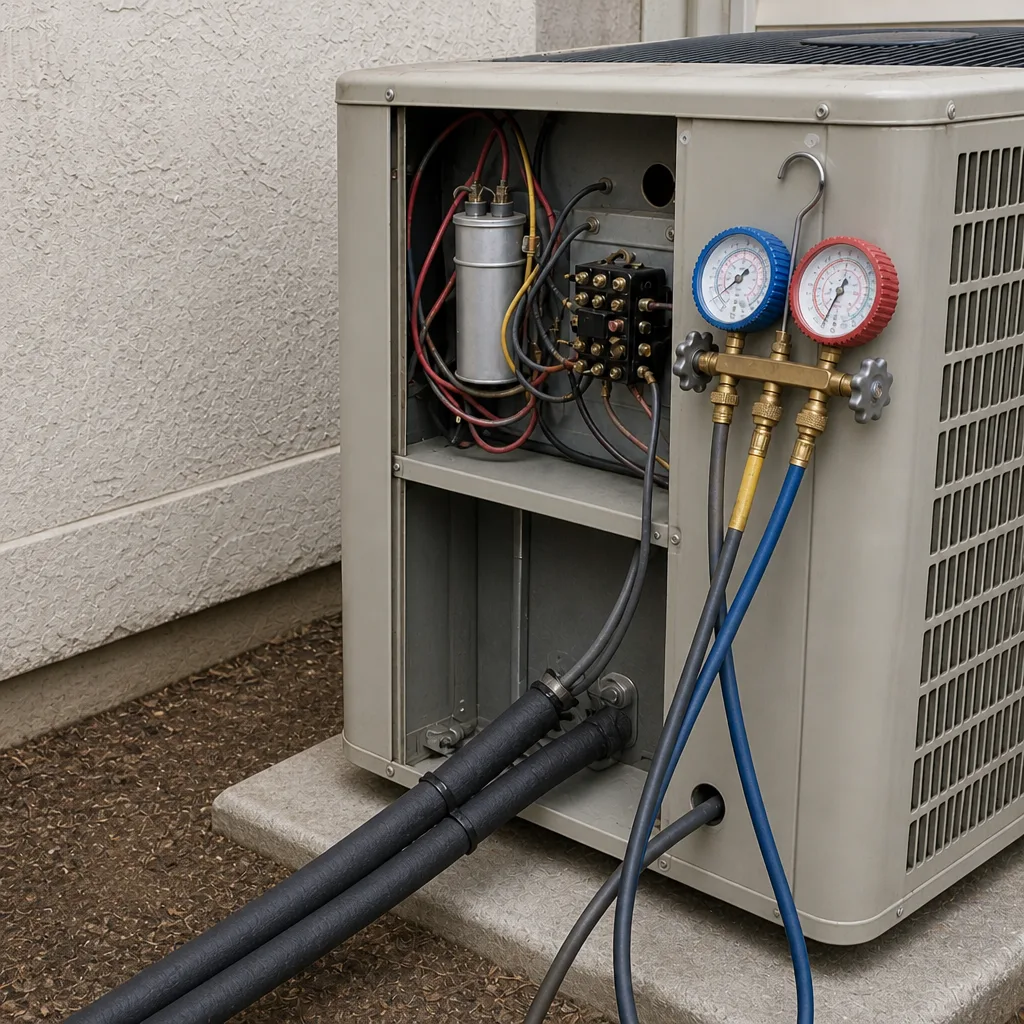
- Check for water intrusion around the indoor air handler. Look at the ceiling, the drain pan, and the floor around the unit. Wet insulation or standing water near electrical components means do not power the system. Call a technician.
- Inspect the outdoor condenser for debris. Sticks, leaves, palm fronds, and roofing material collect in the coil and fan housing. Clear what you can safely reach. Do not reach into the fan opening to free a stuck fan blade. That fan can start the moment power returns.
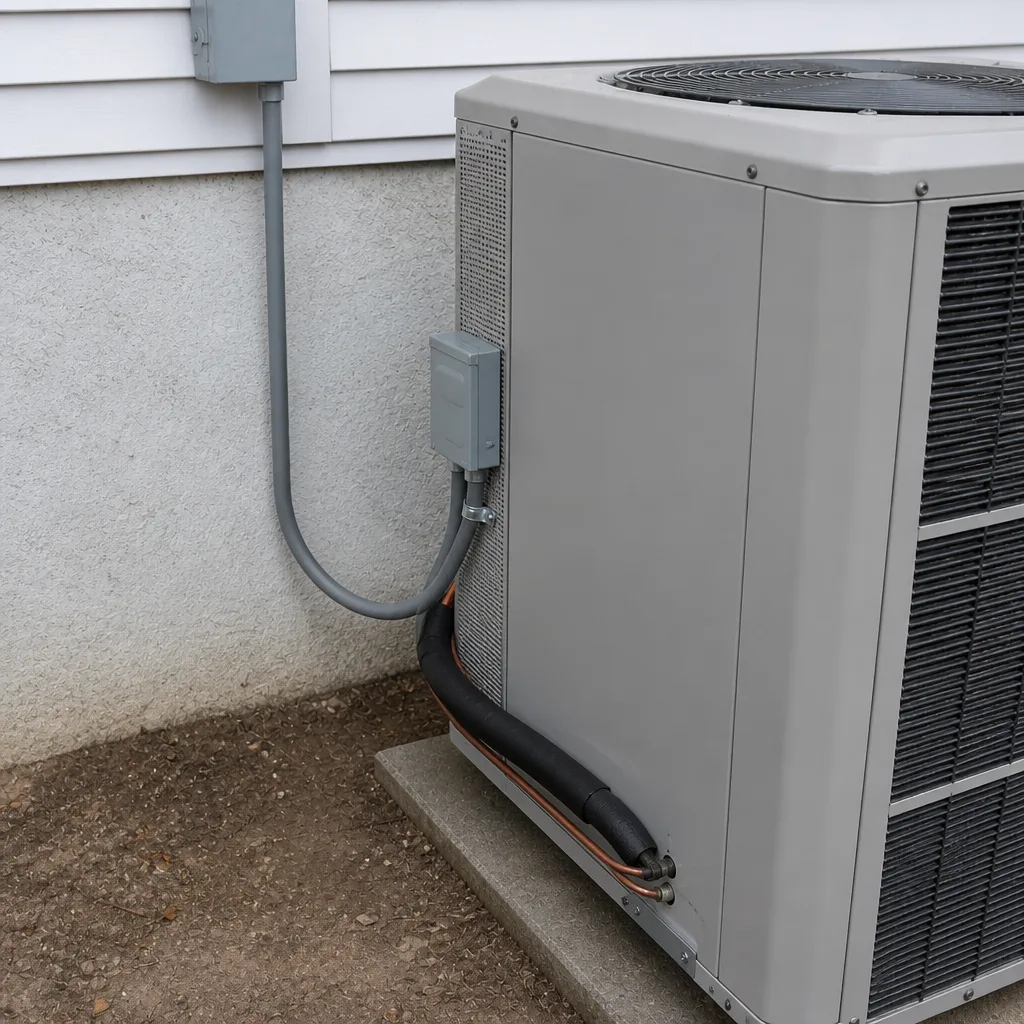
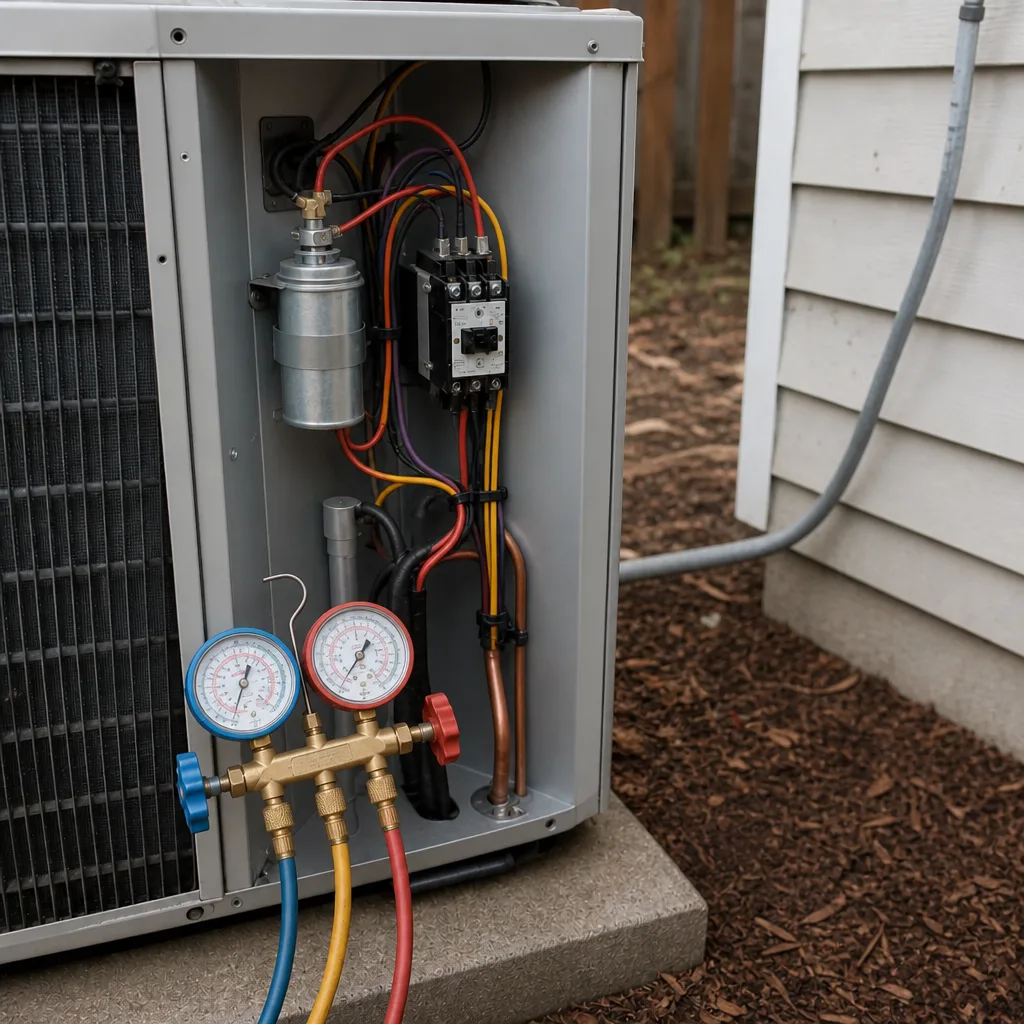
- Look for visible damage to the electrical disconnect and conduit. Cracked conduit, a loose box, or scorched wiring at the disconnect is a stop sign. These are the connections a power surge damages first.
- Confirm the thermostat is off before utility power returns. If you shut the system down pre-storm, leave it off until you’ve done the inspection.
- Turn the system on and listen. After the checks pass, power back up. Listen for unusual noise, watch for an immediate breaker trip, and give it ten minutes before you decide everything is fine.
- Check the drain line. Storms carry enough debris to clog a condensate line. A clogged line means water in your ceiling within a day of restart.
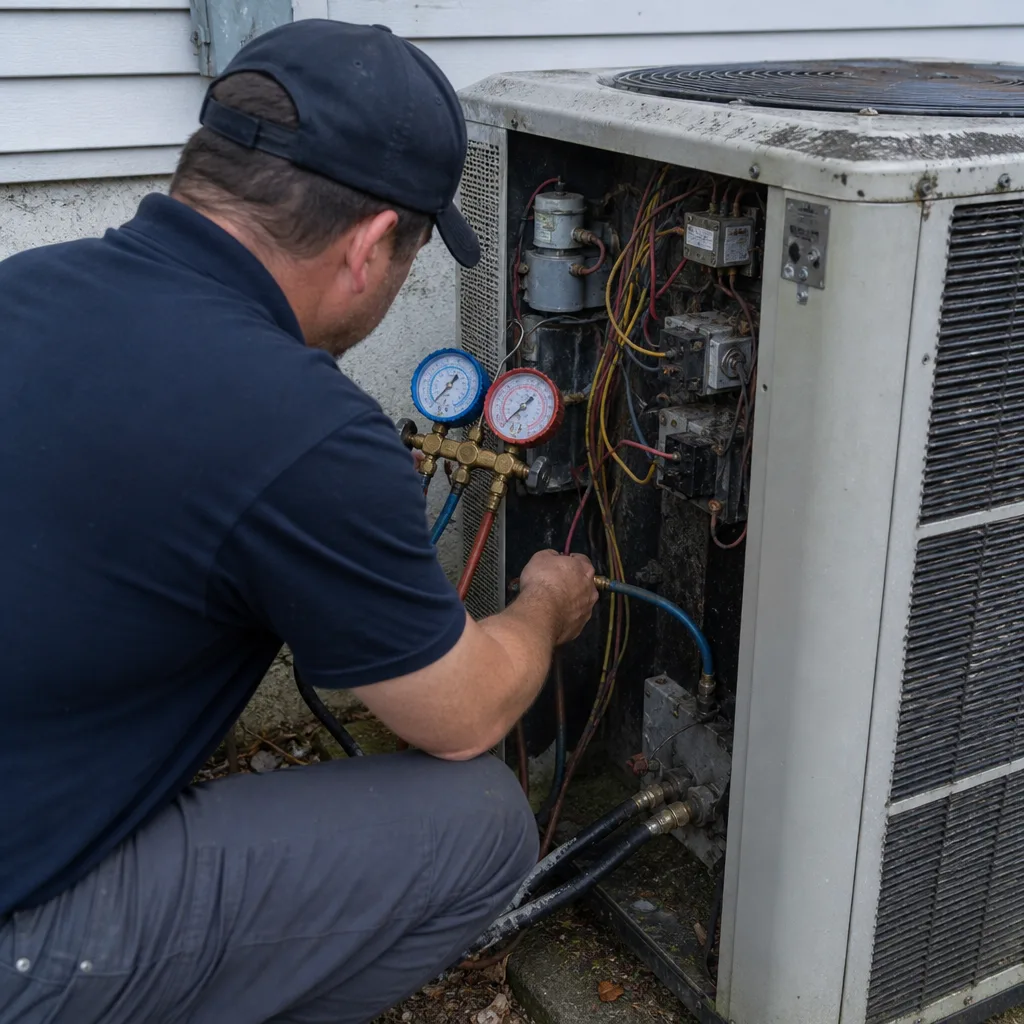
If anything on this list gives you pause, stop there. Our AC repair technicians see post-storm failures every hurricane season that turn a $200 repair into a $900 one because the homeowner restarted a wet system.
Heat Emergency Protocol for Brandon Households With Vulnerable Members
Brandon sits in a part of Florida where peak summer heat index values routinely exceed 105°F for extended stretches. For a healthy adult, a failed AC is uncomfortable. For an elderly parent, an infant, or anyone with cardiovascular or respiratory conditions, medications that affect thermoregulation, or limited mobility, a failed AC is a medical event on a timeline.
If your household has a vulnerable member, the plan should exist on paper before the season starts. Here’s what a working plan covers:
- A destination, decided in advance. Name a specific place your vulnerable member will go if the system fails and won’t be repaired the same day. A relative’s house, a cooling center, a hotel within driving distance. “We’ll figure it out” is not a plan when the house has been at 90°F indoors for six hours.
- A thermometer in the room they occupy most. Indoor temperature and humidity matter more than outdoor heat index when you’re deciding whether to stay or leave. A $15 digital thermometer removes the guessing.
- A medication review with their physician. Blood pressure medication, antidepressants, diuretics, and several other common prescriptions affect how well a body manages heat. Know which apply to your household member before the emergency.
- A list of what goes with them. Medication, phone charger, medical devices, and a way to reach whoever is making the repair decision. Decide who that person is.
- A standing call-in. If they live alone, someone calls twice a day during any outage that lasts past midday.
One more point worth making plainly: Brandon’s overnight temperatures during a summer heat event stay high enough that an open-window strategy doesn’t reliably cool an interior. If the AC is down and it’s July, and you have a vulnerable member, treat it as an emergency from hour one. Call us at (844) 638-9793. We answer 24/7. Fast dispatch from 7am to 7pm.
How to Triage an AC Failure After a Storm
After a storm, every HVAC call in Hillsborough County lands in the same queue. Knowing which category your failure falls into tells you whether to wait on a same-day visit or to start making backup cooling arrangements immediately. Here’s how we sort them.
Likely a fast repair (hours, not days)
- Tripped breaker with no visible damage. Reset it once. If it holds and the system runs normally, you may be done. If it trips again, stop resetting it and call.
- Frozen indoor coil that started before the storm. A system that iced up due to air flow or refrigerant problems before the storm is a normal repair, just delayed.
- Clogged condensate line. Water around the air handler without electrical exposure is usually a quick clear.
- Thermostat not communicating. A blank or unresponsive thermostat after an outage is often a control-side issue, not a compressor failure.
Likely a multi-day wait
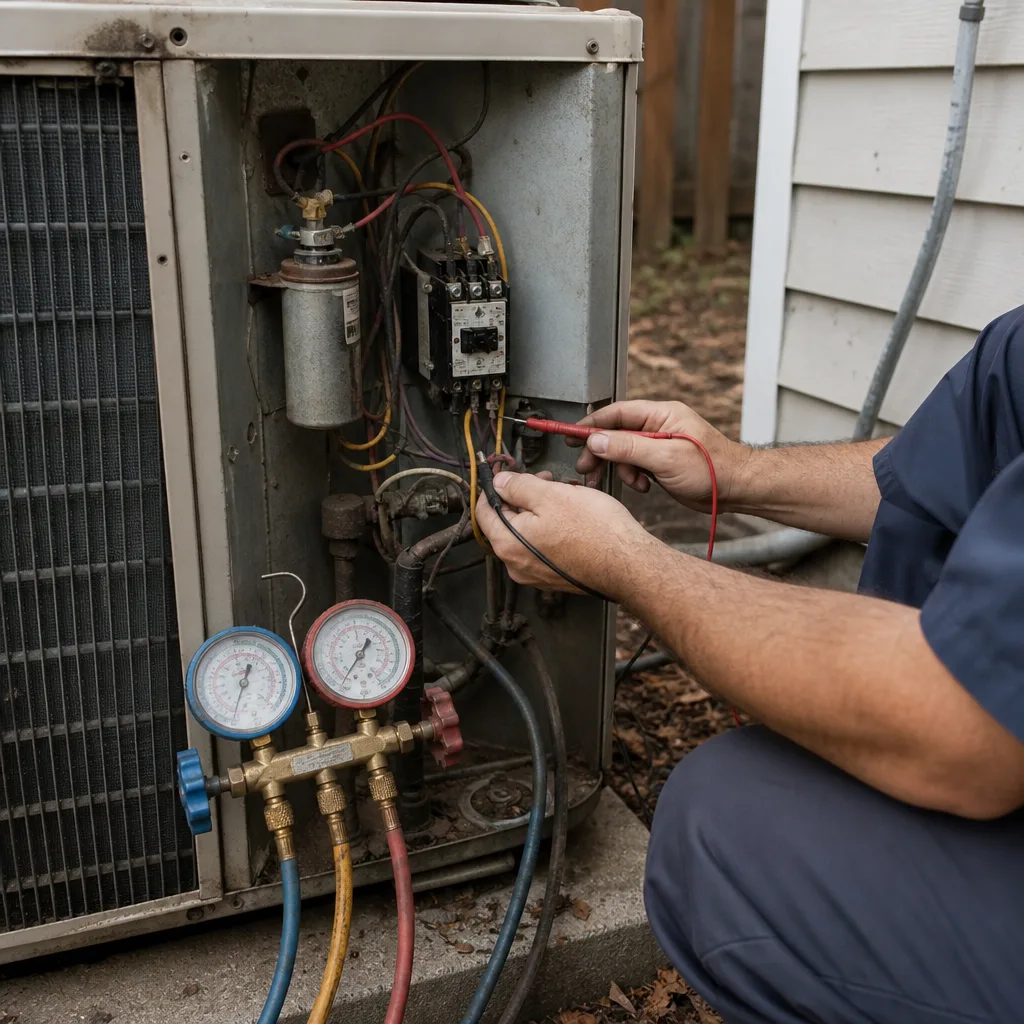
- Visible surge damage at the disconnect or contactor. Burnt wiring, scorched components, or audible arcing means parts need to be sourced and the electrical side needs to be traced.
- Water intrusion into the air handler or the electrical panel serving the system. This is both a repair and a safety inspection. Nobody should be rushing this.
- Compressor failure confirmed. Replacement compressors for Carrier, Trane, Bryant, and American Standard systems are not stocked by every company at every moment, and after a regional storm they get scarce. Ask for a written timeline.
- Impact damage to the outdoor unit. Crushed coil, bent fan blade, or a housing that took a hit from debris. Repairable, but requires parts and a scheduled visit.
If you’re in the multi-day category and your household includes a vulnerable member, don’t wait for the repair to resolve. Activate the contingency plan. A brand-agnostic company with technicians who work across nine major manufacturers will give you an honest repair-versus-replace read faster than a single-brand dealer who only wants to sell you a new unit. That’s the whole reason we operate this way.
Whole-Home Generator vs. Portable Unit vs. Mini-Split Backup
Brandon homeowners ask us this constantly after every storm season: what’s the right backup for an HVAC system that has to ride out a multi-day outage? There’s no single answer, but the tradeoffs are clear.
Whole-home generator
If your system is a standard central AC, a whole-home generator large enough to run the condenser is the only backup that keeps the house at normal temperature. The catch is cost and installation complexity. Central condensers draw significant startup current, so the generator has to be sized for it, and that sizing is a load calculation, not a guess. This is a capital project, not a weekend decision, and it needs to be planned and installed by qualified trades, not improvised after a storm.
Portable generator plus a window or portable AC unit
More realistic for most households. A portable generator running a single window or portable AC unit can hold one room at a livable temperature, which is exactly what a heat emergency protocol needs. The tradeoff is that this solution cools one room, not a house. If your vulnerable member has a defined space, that’s sufficient. If you’re trying to cool a whole house on a portable, you’ll be disappointed. Also, portable generators produce carbon monoxide. They run outdoors, well away from windows and doors, every time.
Mini-split backup system
A small ductless mini-split on a dedicated circuit is the more elegant backup, but its usefulness after a storm depends on whether you have power. If your outage is due to a grid failure, a mini-split doesn’t help without a generator. If your outage is due to a failed central system, a mini-split can carry a primary living space while the central unit is repaired. The honest answer: a mini-split is a good redundancy play for the repair scenario, not the grid-down scenario.
If your central system is aging and you’re weighing whether to protect it or plan for the eventual replacement, the honest conversation usually starts with a diagnostic. Our AC installation process begins with a load calculation, not a quote, because the right system for your home is a sizing question before it’s a brand question.
Building Your HVAC Storm Kit for Brandon
Most storm kits are built around water, food, and batteries. Ours is built around your system. Here’s what to have on hand before June, not before a named storm.
- Sentry’s phone number written somewhere that isn’t your phone: (844) 638-9793.
- A digital indoor thermometer and humidity gauge for the room your vulnerable member occupies.
- Flashlight and headlamp rated for working near electrical equipment.
- Photographs of your system, including the outdoor unit, air handler, disconnect, and serial plates, stored somewhere cloud-based.
- A window or portable AC unit with a correctly sized window panel, tested before the season starts.
- A portable generator with enough capacity for that unit, plus fuel, stored safely.
- Your manufacturer documentation, if you have it. Knowing your system is a Trane, a Bryant, or an American Standard tells us which parts and technical bulletins to check first.
- A written destination for each vulnerable household member.
The kit is not complicated. Building it takes a Saturday afternoon. What it does is convert a crisis decision into a five-minute task when a storm is bearing down on Brandon.
Pre-Season Maintenance That Prevents Most Emergencies
Most of the HVAC emergencies we diagnose in Brandon trace back to a condition that was developing for weeks. A system that struggles through the shoulder season struggles harder in July, and the same marginal capacitor or failing blower motor that was going to stop eventually usually stops during the worst possible week.
Pre-season maintenance is unglamorous. It works. A proper check covers the electrical components that fail under load, the refrigerant charge that affects compressor stress, the coils, the condensate line, and the thermostat calibration. Call early in the season, not the week before a storm. If your AC hasn’t been serviced since last summer, the diagnostic visit is worth more than the repair you might be postponing.
Our technicians have up to 9 years of experience. They work on Carrier, Trane, Lennox, Goodman, Rheem, York, Daikin, Bryant, and American Standard equipment, which matters because a brand-agnostic technician reads the specific system in your home rather than a script their distributor gave them. Brand-agnostic means we work on your system, not against your budget. When a repair is the right answer, we say so. When replacement is, we say that too, and the decision is yours.
Common Mistakes to Avoid
- Restarting a storm-shut system without inspection. A wet air handler or a compromised disconnect doesn’t usually fail at the moment of restart. It fails minutes later, after a warm day of load. Inspect first, then restart.
- Resetting a tripped breaker more than once. If the breaker trips twice, something is wrong that a reset won’t fix. Continued resets risk compressor damage.
- Running a portable generator indoors or in the garage. Carbon monoxide kills. Generators run outdoors, far from windows and doors, every time.
- Assuming a vulnerable household member will “be fine” through an outage. A summer outage in Brandon with the index over 105°F is a health event for a senior on blood pressure medication. Activate the plan early, not after the house hits 88°F.
- Waiting for a single-brand dealer to get the exact part. If your system is a Lennox and the company you called only services Carrier, you’re waiting longer than you need to. Call a company that services the nine major brands.
- Skipping the pre-storm photograph. Insurance claims after a hurricane go faster when you can prove the pre-storm condition of the equipment.
- Using a generator sized only for lights and refrigeration while planning to run the whole AC on it. Startup current for a central condenser is far higher than running current. Get the load calculation before you buy.
When to Call a Professional
Call us immediately if any of these apply: your system is running but not cooling after a storm restart; you see or smell burnt wiring at the disconnect or air handler; there’s water in the air handler or the ceiling around the unit; the breaker trips more than once; the compressor is making noise it didn’t make before; or your indoor temperature is climbing past 82°F and you have a vulnerable household member. Also call if the outdoor unit took any visible impact during the storm. Coil damage isn’t always obvious from a distance.
At Sentry AC Repair we offer free estimates in Brandon. Call (844) 638-9793. We answer 24/7. Fast dispatch from 7am to 7pm, Sunday through Friday. Post-storm scheduling fills quickly, so earlier is better.
Frequently Asked Questions
Turn the thermostat to off, pull the disconnect at the outdoor condenser if you have one, clear the immediate area around the unit of anything that could become a projectile, and photograph the system for insurance purposes. Do not leave the system in cooling mode during the storm. A safe shutdown protects the compressor from grid instability.
The most common signs are a breaker that won’t reset, a thermostat that’s blank or unresponsive, scorched wiring at the disconnect, or a compressor that hums but won’t start. If you see any of those, stop trying to restart the system and call for a diagnostic. A surge that damaged the control board or contactor is often a straightforward repair, but only if you don’t make it worse by cycling power repeatedly.
A Brandon heat event with an index above 105°F is a medical risk for elderly and medically vulnerable household members, not just an inconvenience. If the indoor temperature is climbing and the repair can’t happen the same day, activate your contingency plan and get the vulnerable member to a cooler location. Don’t wait to see how hot the house gets. Call (844) 638-9793 for a same-day diagnostic if you’re in that situation.
For most standard central AC systems, yes. A whole-home generator sized for your condenser’s startup current is the only backup that keeps the house at normal temperature. A portable generator running a single window or portable AC unit is a more realistic option for most Brandon households and is sufficient for holding one room at a livable temperature for a vulnerable member. Mini-splits are useful when a central system fails, not when the grid is down.
We service nine major brands: Carrier, Trane, Lennox, Goodman, Rheem, York, Daikin, Bryant, and American Standard. If you’re not sure what you have, the model and serial plates on the outdoor unit will tell you. Our technicians have up to 9 years of experience working across these systems, and we aren’t tied to any manufacturer’s distribution quotas, so the recommendation you get is about your equipment, not a brand’s sales target.
It depends on the failure. Breaker resets, clogged condensate lines, and control-side issues are often same-day or next-day. Compressor failures, surge-damaged components, and impact damage to the outdoor unit can be multi-day because parts have to be sourced and the queue is longer after a regional storm. When you call, ask for an honest timeline and get it in writing.
The Bottom Line
Brandon HVAC emergency preparedness isn’t really about your system. It’s about the four days after an outage when the heat index is over 105°F and you have to make real decisions about real people in your house. The plan is what separates a difficult inconvenience from a medical risk. Know your pre-storm protocol. Inspect before you restart. Triage every failure honestly so you know whether to wait on a same-day repair or activate a backup plan. Keep a written destination for every vulnerable household member. And call us when the system tells you it’s in trouble, not after. Our job is to guard your system, not to sell you out of it. If we can repair it, we will. Call (844) 638-9793 for a free estimate. We answer 24/7. Fast dispatch from 7am to 7pm.
Written by the team at Sentry AC Repair.
See the difference
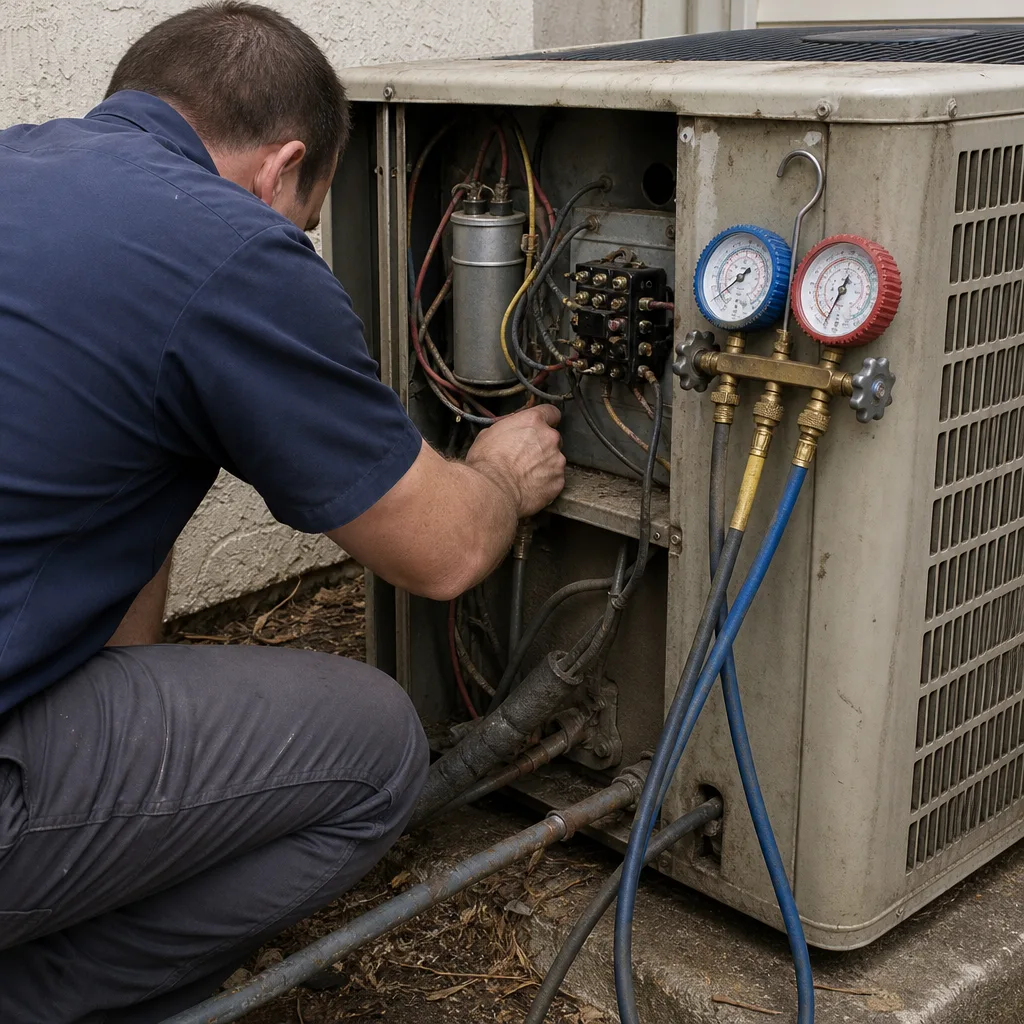 Before
 After
 Before
 After
 Before
 After